
What you Must Know About Investing in the Equity Market During the Current Global Uncertainty?
Undoubtedly, the year 2020 has been much different than anything the investmentment world has seen to date. previously, when the market experienced turmoil to this level, some economists could have predicted the decline in the market by using different metrics and indices, but this time everything is different. We are dealing with a market that has more to do with the global health situation and the spread of the pandemic than the economic metrics we are all very well familiar with.
In the past couple of months, the bears have wrecked the equity and debt market heavily. From the peak on January 14 of 2020 to its worst day on March 23rd, when the market dived almost 38 percent to its lowest point in the past couple of years.
But remember, even though the nature of this economic downturn is different from before, there are interesting similarities with the previous market crashes. The stock market is operating as it always has, on a mix of solid data, fear, rumors, hope, half-truths about new medications, and so forth. One noticeable example was last Monday; the market gained significantly because of the hope of economic recovery started to flood the market as the partial reopening of the economy started. It is interesting to notice that the current market recovery behavior resembles the recoveries of 2009 with the S&P 500 regaining almost %35 percent from the troughs of the market. Is this a good sign?
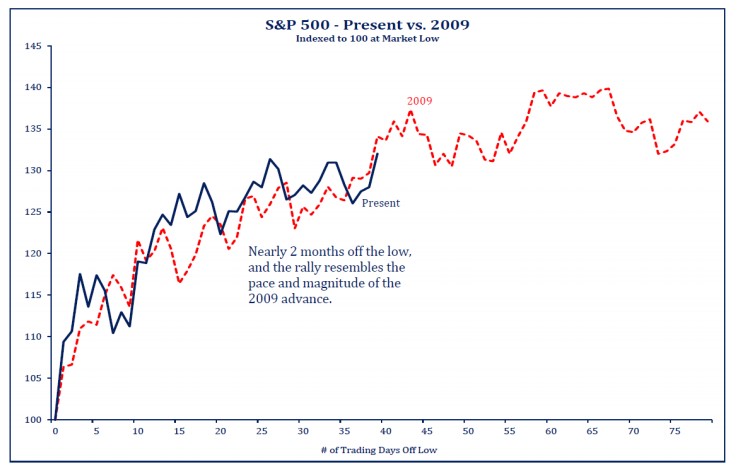
Figure 1. A comparison of the rebound in the current market with the rebound in 2009
As an investor, you need to understand where the economy stands today and where it could go forward to make a wise decision about your investment strategies. Let us take a quick look at what happened to the market last week.
Last week, there has been a positive return for both bonds and equities however the year to date performance is of course still negative but the TSX is getting close to breaking even and we could see that it has started to bounce back which could be good news.
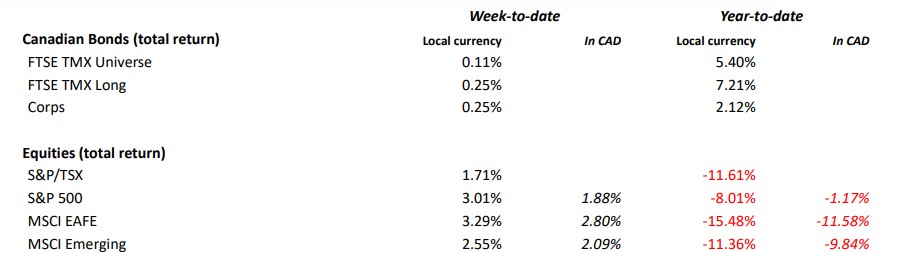
Figure 2. Market performance at the close on May 21st, 2020
It is important to understand why the market is recovering. While some of the aspects of the market recovery are because of the uncertainty of the future and emotion-driven buying and selling behavior, there are other important factors that you need to consider, the biggest of all is the relationship between the interest rate and equity market. How do the two operate with RESPect to one another? Here is how the story goes.
The two main investment vehicles investors can use are stocks and bonds. Stock is a type of investment that represents an ownership share in a company. To put in simple words, as the company grows and earns more revenue, the stock price of the company appreciates. Bond, on the other hand, is more of a contract between two parties: an investor and government or a company. Through issuing bonds, companies, and government basically borrowing money from the investors in exchange for a guaranteed rate of return.
Now, what does all this mean?
When the interest rate of the central bank is high, so is the rate of return of bonds. Let us explore this through example. Examine the 10-year US treasury interest rate which is the benchmark used to decide mortgage rates across the U.S. and is the most liquid and widely traded bond in the world (Figure 3). Notice the spike in 1981 when the bond return rate is almost hitting a %16 percent return. That means by purchasing this bond, you would have received a guaranteed return of %16. At the time, the interest rate for the mortgage was at its peak of %20. You can think about bank interest rates on lending (mortgages, loans, line of credits) having a direct relationship with the bond market rate of return. As the interest rates hike, so does the bonds return.
How does this affect the stock market? Well, when there is a guaranteed return of %16 on the table for you, would you invest in stocks over bonds? Your answer will probably be no because, for your investment in stocks to make sense, your investment needs to beat %16 return on your investment, which is a very decent rate of return. Not surprisingly, figure 4 shows the return rates of S&P 500 and you can see that during the time when bonds were at the high point, the S&P 500 returns were at its low point around %7.6.
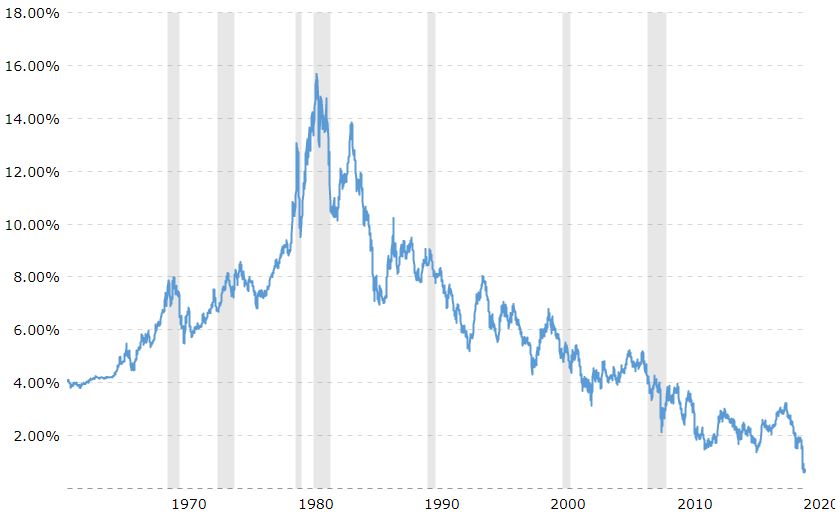
Figure 3 10 Year Treasure Rate – 54 Years historical chart
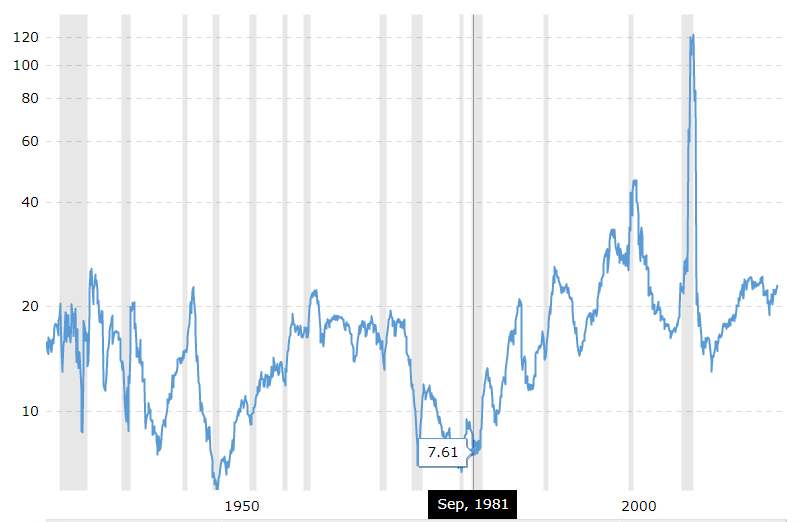
Figure 4. S&P 500 PE ratio – 90 Year Historical Chart
There are various reasons why there is an inverse relationship between stocks and bonds. We will discuss two of the most important reasons: 1) Demand 2) Monetary Policies and Government Bailouts.
To understand the demand perspective, think about a simple supply and demand relationship. During the times with high bank interest rates, the demand for bonds increases simply because bonds will have the ability to provide high guaranteed rates of return and investors will flood the bond market with their capital. Since all the attention is focused on bonds, stocks will be traded less; they will experience declined demand and capital into the market and this will affect the rate of returns of the companies issuing their stocks and results in lower returns. On the other hand, look at the spike in the S&P 500 in 2009, after the great recession. While the stocks are looming with the high and exceptional returns, the bond market is experiencing its low point of 3%-4%. This is during the time when the feds slashed their interest rates to near-zero to stimulate the economy. During this time, businesses can borrow money at a lower cost and spend on their operations and expansion projects and earning a higher income, thus more appreciation toward the stock prices. Does this sound familiar to 2020? It sure does.
The second important factor is the monetary policies of the federal government and central bank that play a huge role in the returns of stocks and bonds. The strategies feds choose to control and stimulate the economy will drive the ups and downs of the markets. Let’s examine how the central bank dictates the interest rate for lending and let’s keep it as simple as possible. When the economy is slowed, the lending rate is lowered, why? You have guessed right; in order to stimulate the economy and put more cash in the hands of business and individuals for spending. As the economy grows, businesses and people will have more money in their hands, and it will lead to inflation. To control inflation and keep the economy in balance, the feds will increase the interest rate slowly, making it more expensive for businesses and individuals to borrow money to essentially control the economy and keep it healthy. Have you heard of the expression: “taking the punch bowl as the party gets going”? This is the exact situation. Back in late 2008, the interest rate of the central bank was slashed to nearly zero in order the counteract the slowed economy and stimulate growth.
It is also important to mention that during the time of economic hardships, much like 2008, the feds release billions of dollars in bailout money into large corporations that employ thousands of individuals in order to decrease the unemployment rate. Why is this important? Bailout money is a free money government will provide large businesses to prevent them from insolvency.
The lowered interest rates along with the government bailouts handed to big businesses create a positive effect in the market and can help to prevent insolvency of some of the big companies. Therefore, they become a prime target for investors rushing their capital into those companies, hence the stock prices will rise.
What does all of this mean for investment in 2020?
As I mentioned in the beginning, even though the cause of the current economic situation is a result of the global pandemic and not because of economic metrics, you can easily see a lot of similarities to the previous economic downturns. The interest rates have been slashed to nearly zero, the government’s balance sheet is growing because they are injecting trillions of dollars in the economy in the forms of bailouts (list of bailout receipts in 2020) and partly forgivable loans. The S&P 500 is rebounding after its crash much like the rebound in 2009. All in all, this is the reason that despite the global uncertainty due to the current pandemic situation, the equity market is not completely dismantled and you can see the market has started a trajectory toward a rebound. During this time, you need to consider investing in companies that will benefit from the government bailout and forgivable loans and will come back stronger than before once the global situation gets better.
*Disclaimer
Remember that this entry is in no means a financial or investment advice to our beloved investors. This is merely our opinion based on what we see in the market. Obtaining financial advice from investment professionals requires a detailed analysis of your investor profile and risk tolerance. We do not recommend engagement in investment without consideration of the mentioned steps. If you are looking to modify your investments or simply start investing, our expert advisors at Apluswealth will be more than happy to assist you.